People start arriving before the team does. By the time our vehicles pull in there is already a line along the wall, mostly elderly, mostly accompanied by a son or a grandson who has taken the day off work to bring them.
Registration
The first desk is the simplest and the most important. A name, a CNIC number, an age, a complaint. Patients are given a numbered slip and that number decides the order for the rest of the day. No one moves up the queue for any reason, and we say so out loud at the start of every camp.
Screening
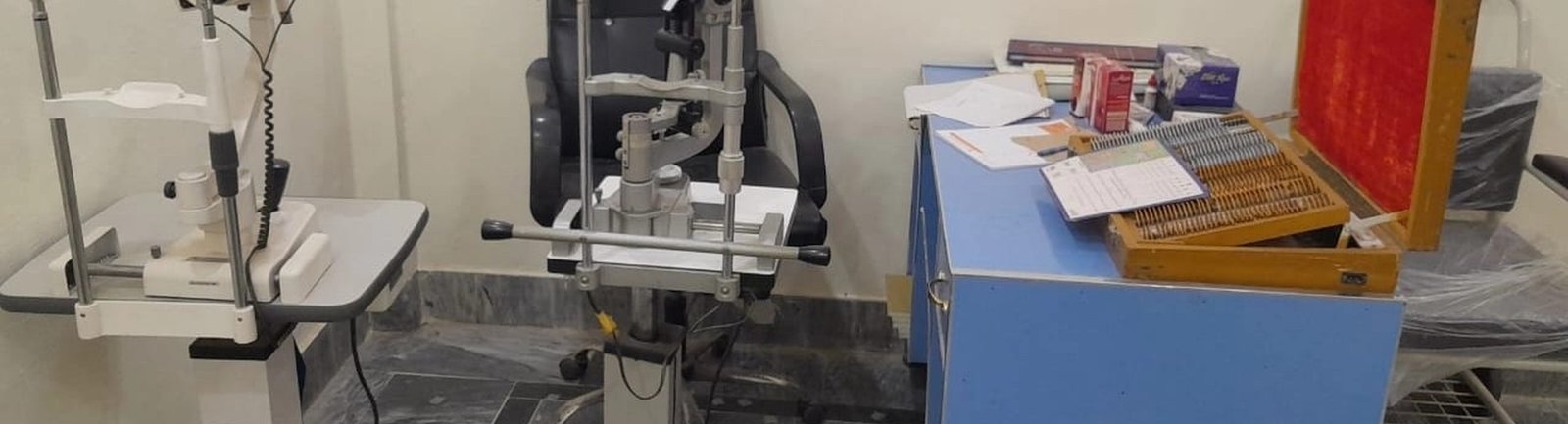
Vision is checked at distance and near, then pressure, then a slit-lamp examination. Most of what we find is refractive error, which means a pair of glasses solves it the same afternoon. The rest divides between cataract, which is referable, and conditions that need a specialist we cannot provide on site.
- Roughly six in ten patients leave with prescription spectacles
- About one in five is referred for cataract surgery
- The remainder are treated with medicines or given a follow-up date
The hardest part of the day is not the medicine. It is telling someone we cannot help them here, and making sure they leave with a name and a date rather than nothing.
What it costs
A camp of this size runs to roughly PKR 450,000 once medicines, lenses, spectacles, transport and meals are counted. Divided across the patients seen, that is under PKR 1,500 a person, and it is entirely covered by donations.